

Exhibition
PALAZZOIRREALE Out of Home
October 30, 2026 – November 1, 2026
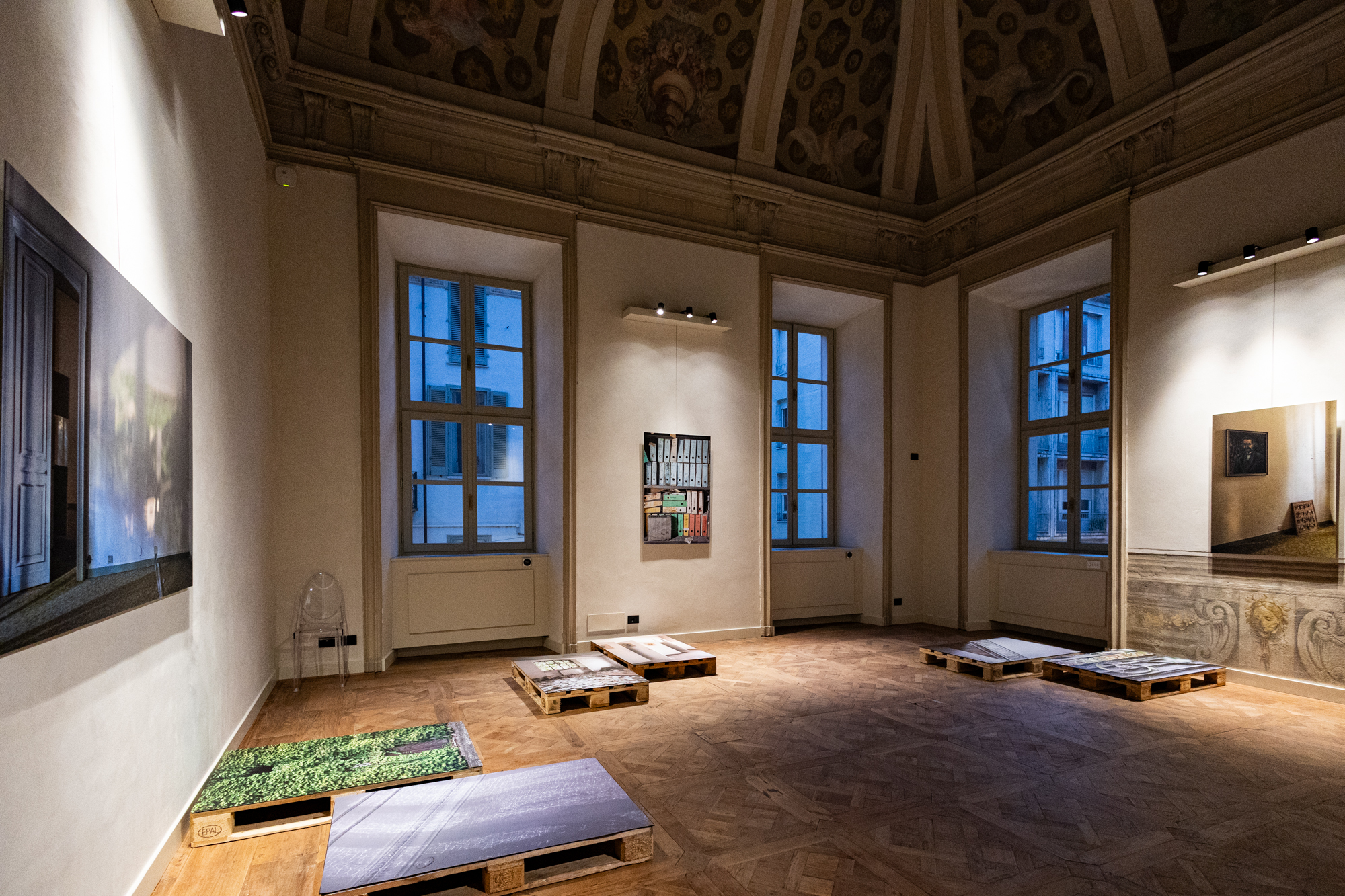
Piano Nobile Torino | Palazzo Saluzzo Paesana
Via della Consolata, Torino (TO)
Hours:
Friday 30th and Saturday 31st: 10:00 AM – 6:00 PM | Sunday 1st: 10:00 AM – 1:00 PM
Fondazione Bosca ETS and PALAZZOIRREALE opens the exhibition
“PALAZZOIRREALE Out of Home” at Piano Nobile Torino – Palazzo Saluzzo Paesana
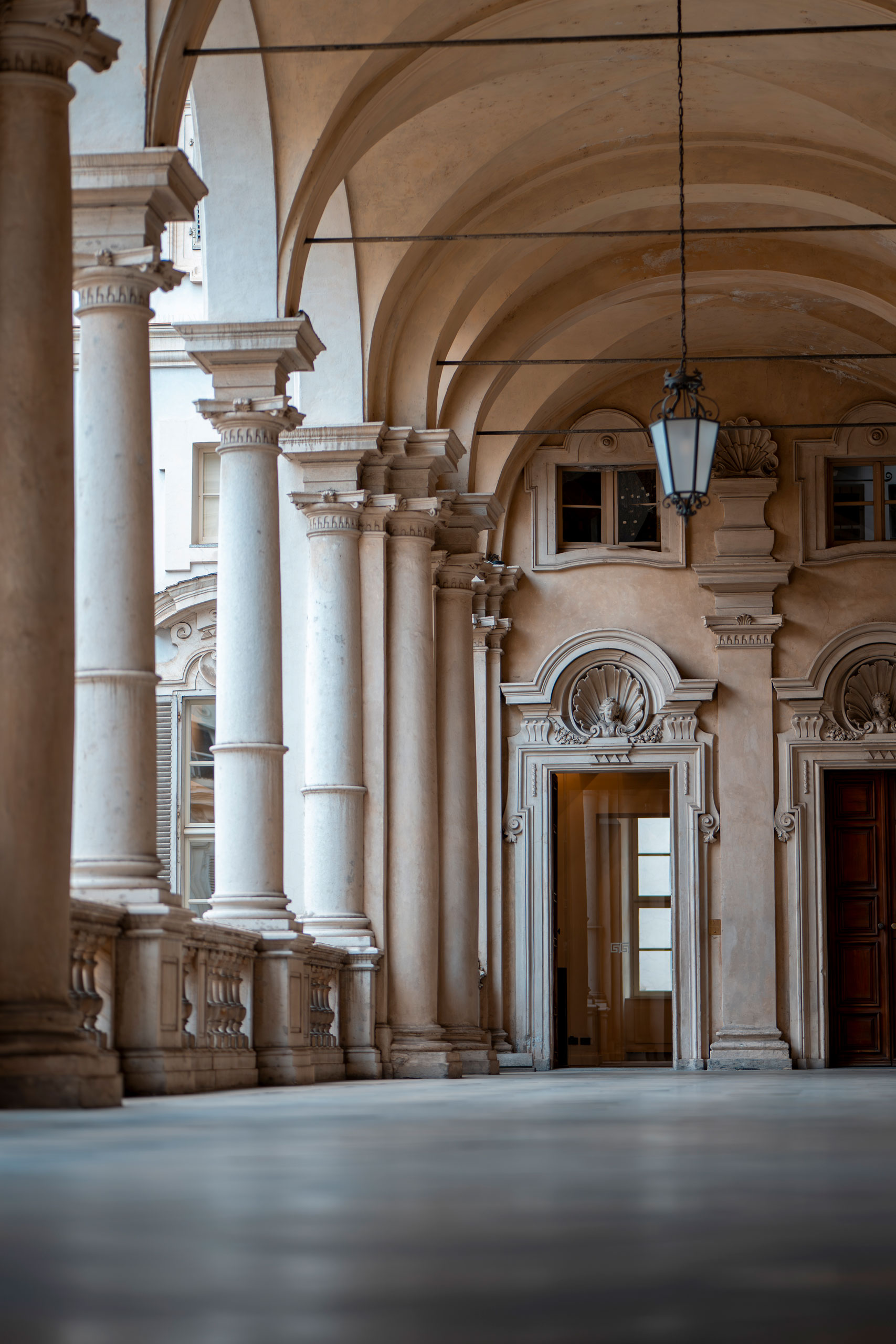
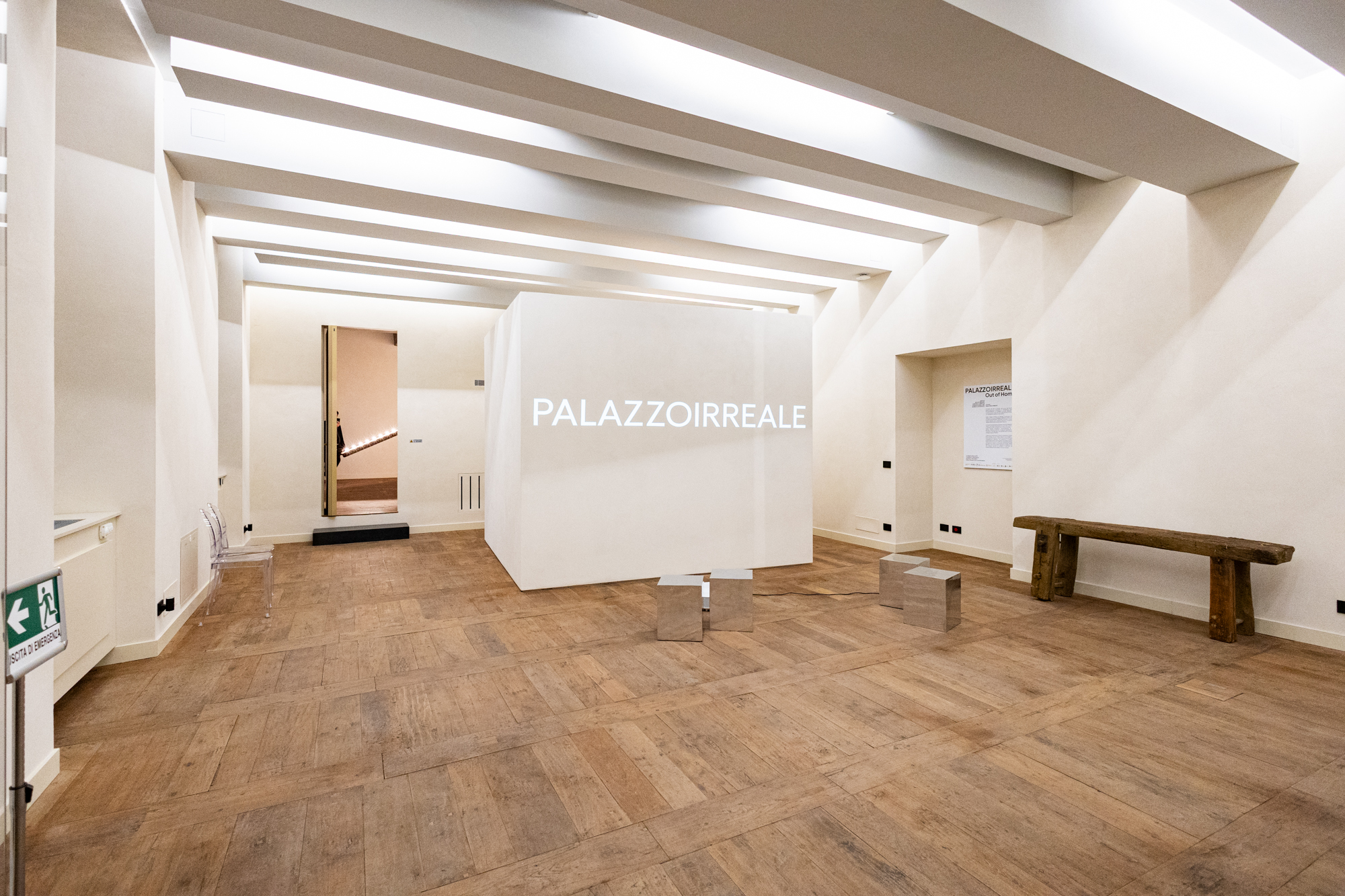
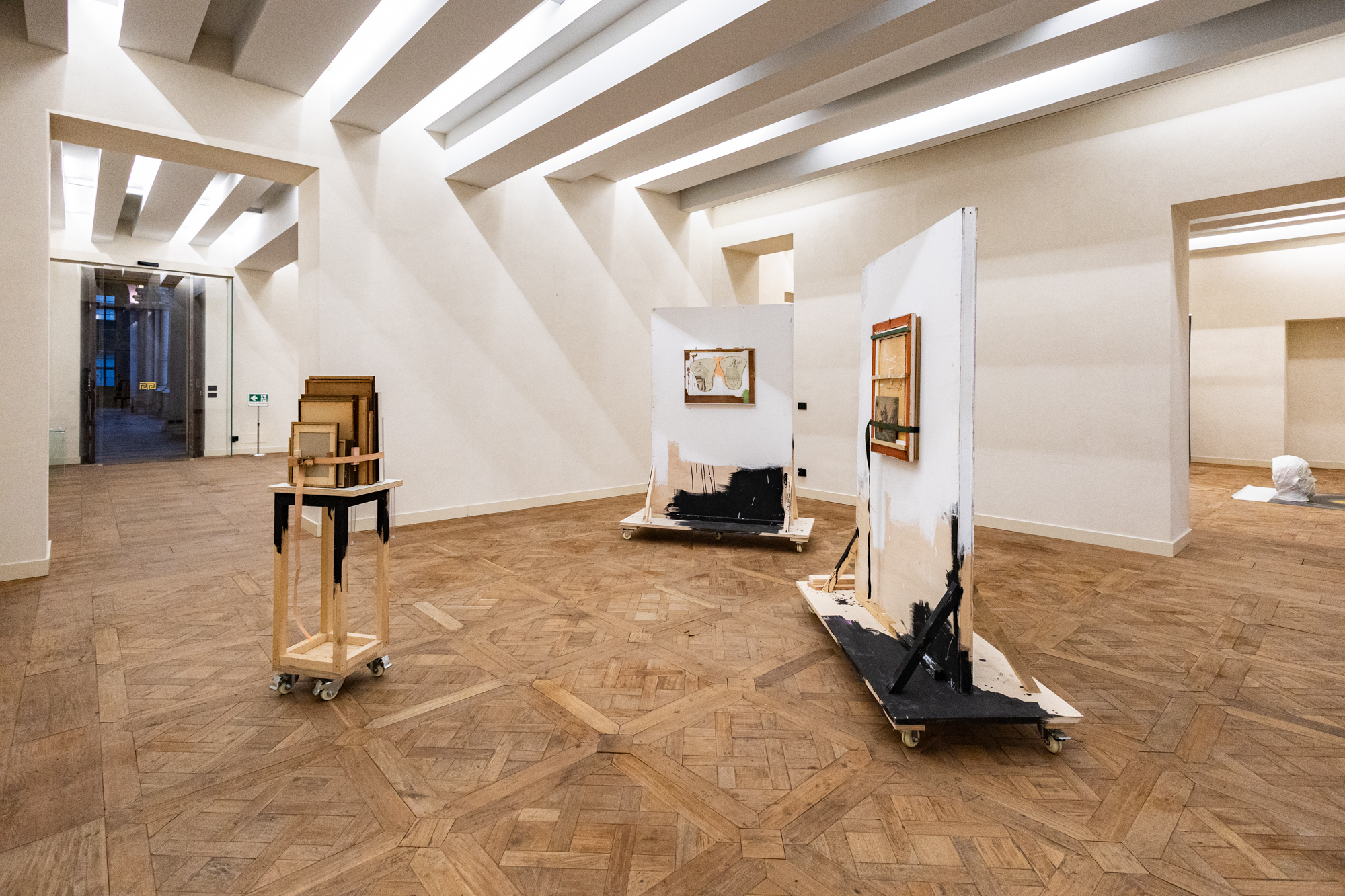
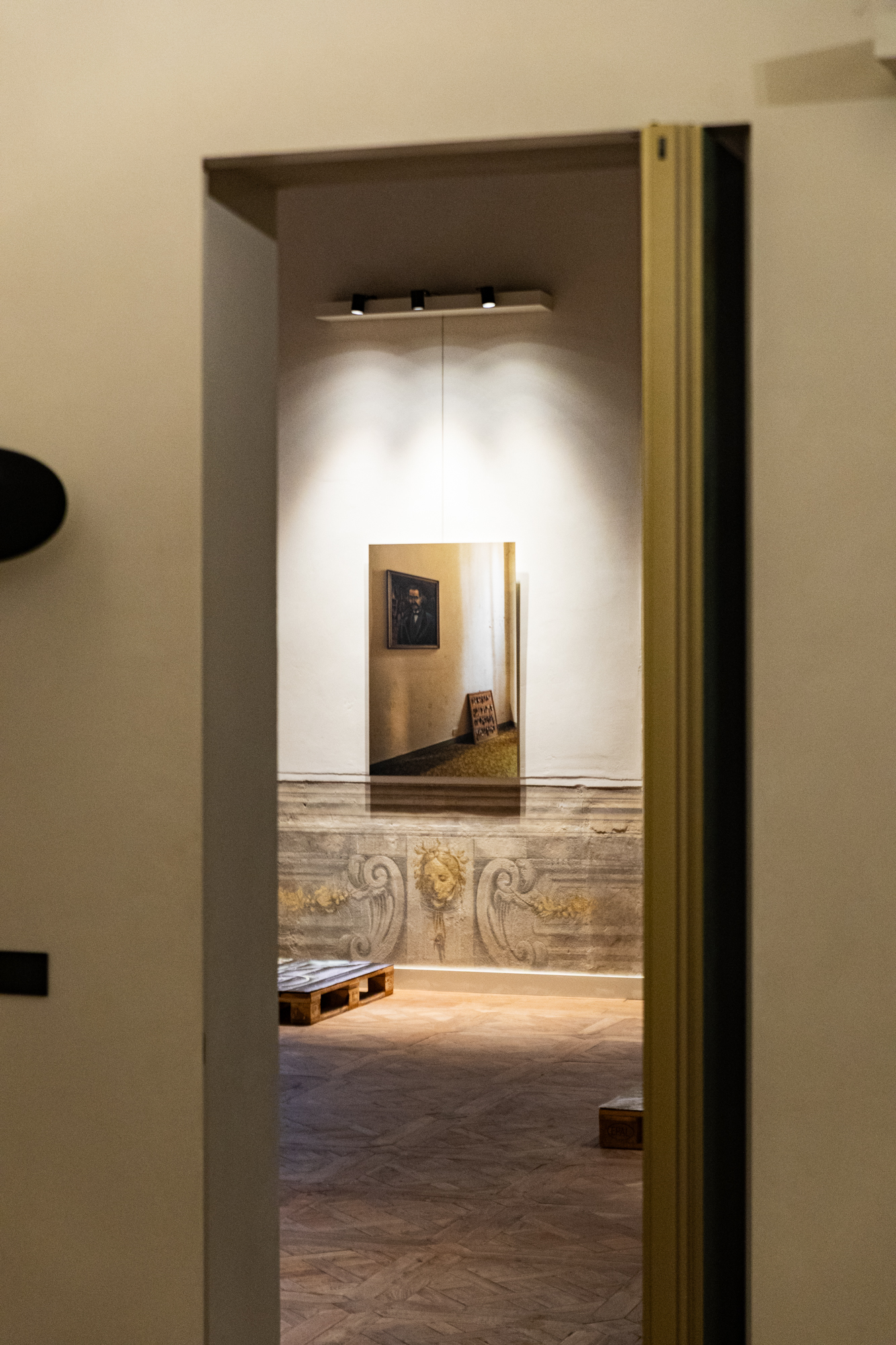
On the occasion of Artissima—a key fair event marking one of the central moments of Turin’s contemporary art week—PALAZZOIRREALE presents a self-titled exhibition curated by Maria Chiara Valacchi in the splendid setting of Palazzo Saluzzo Paesana. From October 28 to November 1, the exhibition offers the public an opportunity to encounter the works of some of the artists who have contributed to the growth of the program and its progressive anchoring in the contemporary art system. Set within the historic rooms of the piano nobile, the exhibition unfolds along an articulated path centered around four high-impact installations, offering four distinct reinterpretations of the present through the personal languages of Jacopo Benassi, Ludovica Carbotta, Giuseppe Gabellone, and Patrick Tuttofuoco. The works establish a dialogue with the architecture and history of the palazzo, giving life to an itinerary where different artistic sensibilities engage with space, matter, image, and the transformations of contemporaneity.
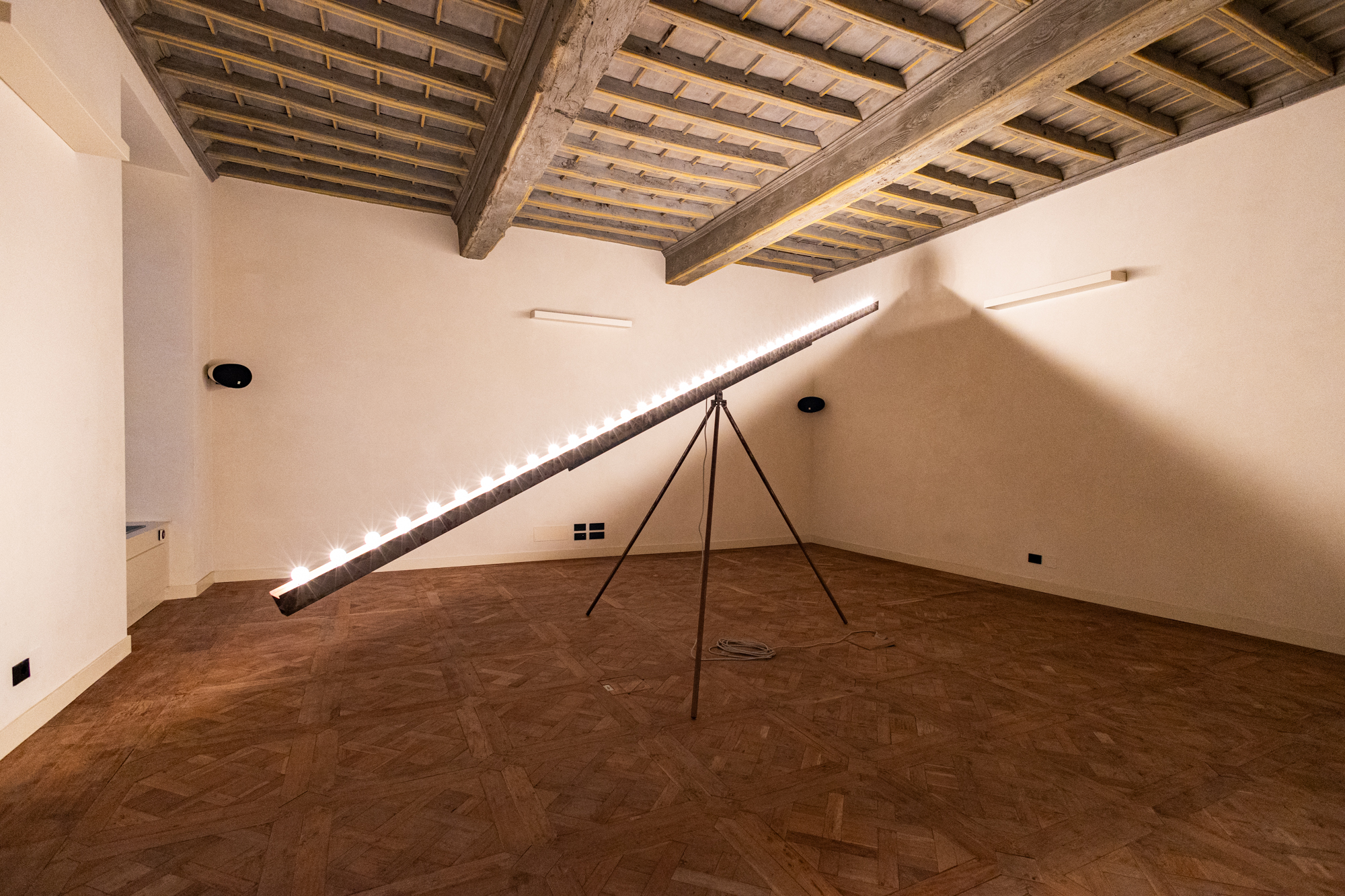
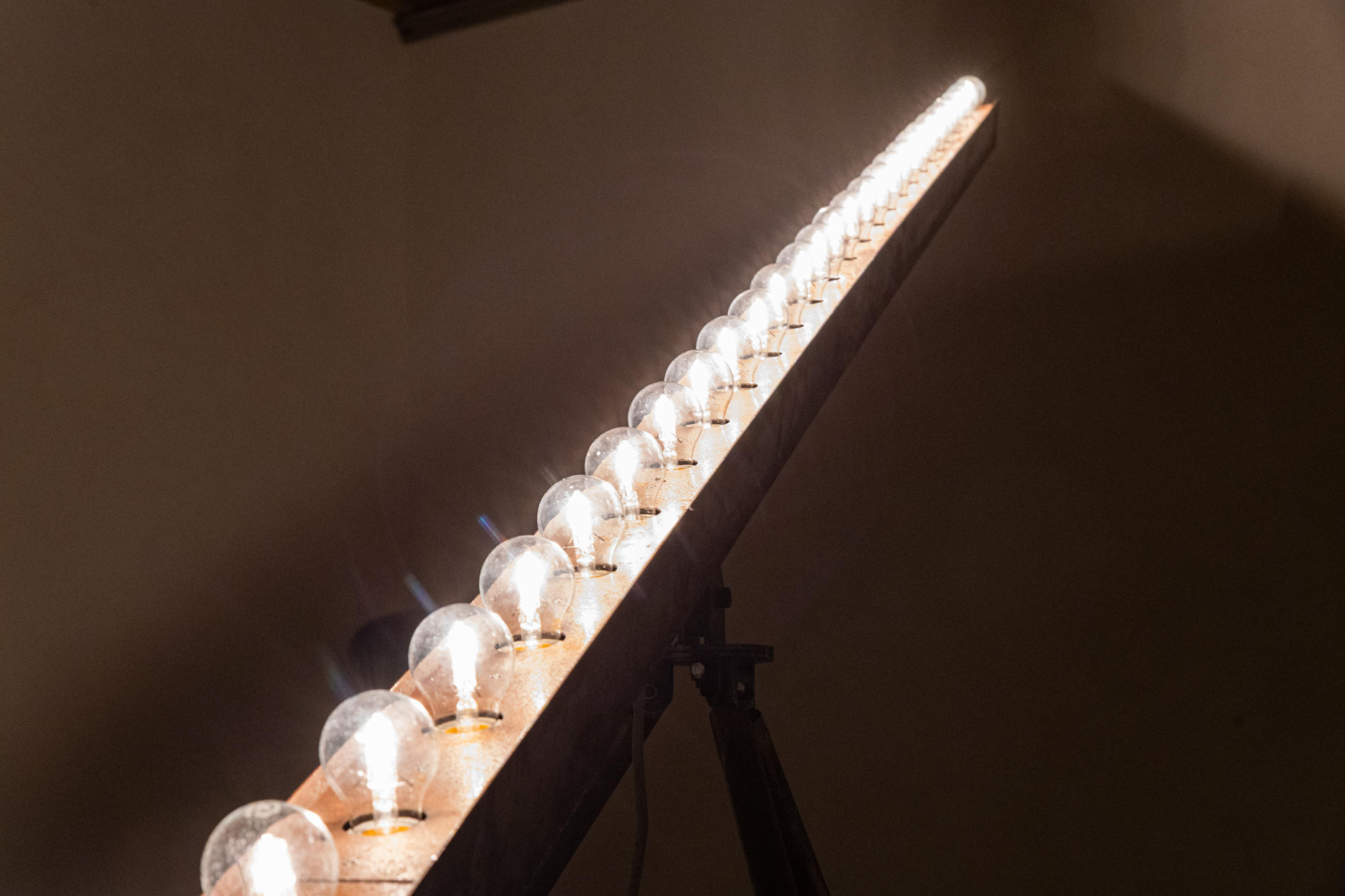
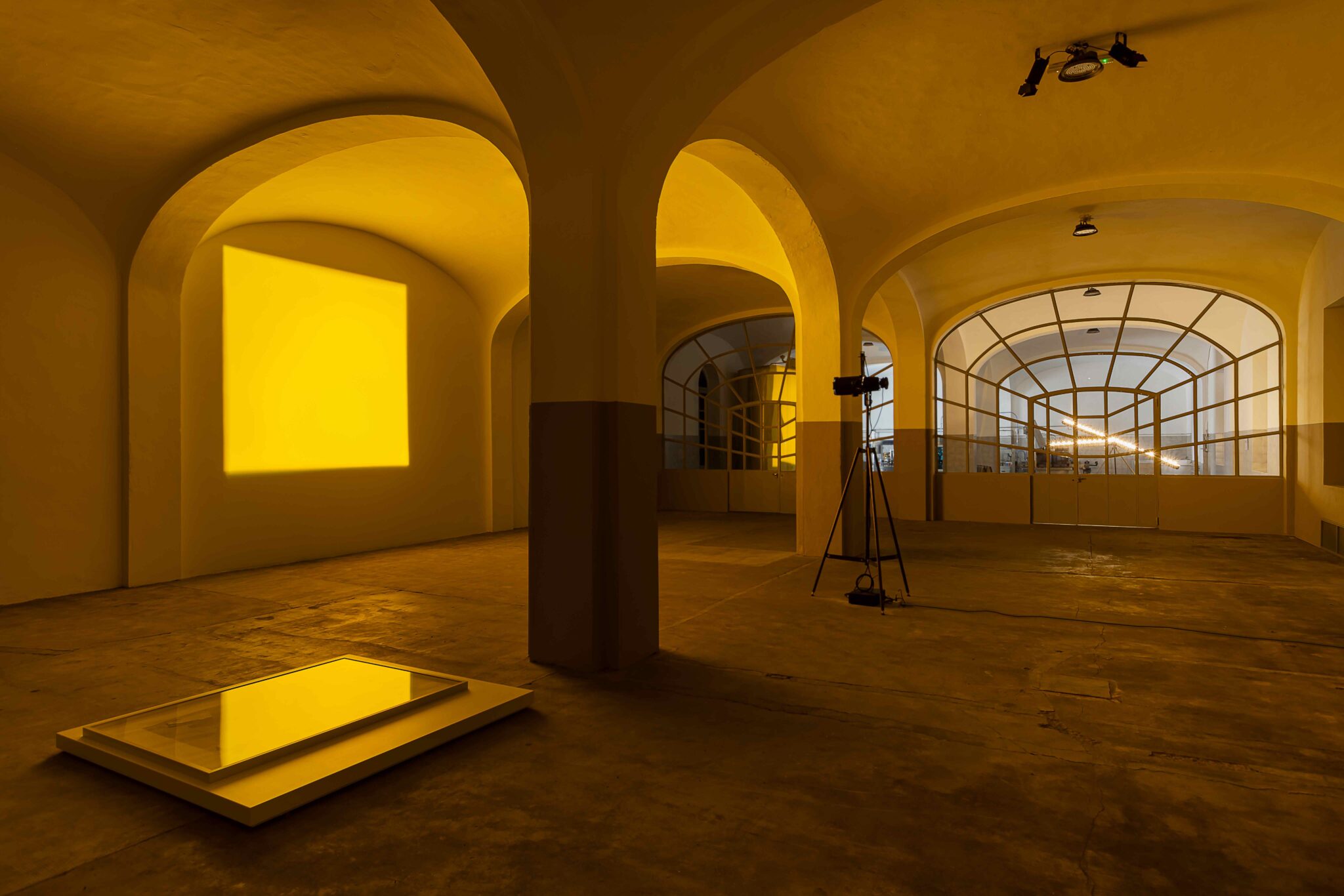
The exhibition opens with the evocative and minimal work by Giuseppe Gabellone, Untitled. A long metal bar, crossed by a sequence of light bulbs, cuts across the entire space, creating an essential mechanism of relation between light, matter, and architecture. Reaching out diagonally from a slender steel tripod, the work maintains a suspended visual tension, alluding to the presence of an object with an almost sacred quality. Its dynamic experience invites viewers to perceive and record its multiple vantage points through a process built progressively as the body moves through space. The installation thus assumes a ritual dimension, evoking a strange pagan object capable of redefining the perception of the room and instilling an atmosphere of deep listening and meditative contemplation.
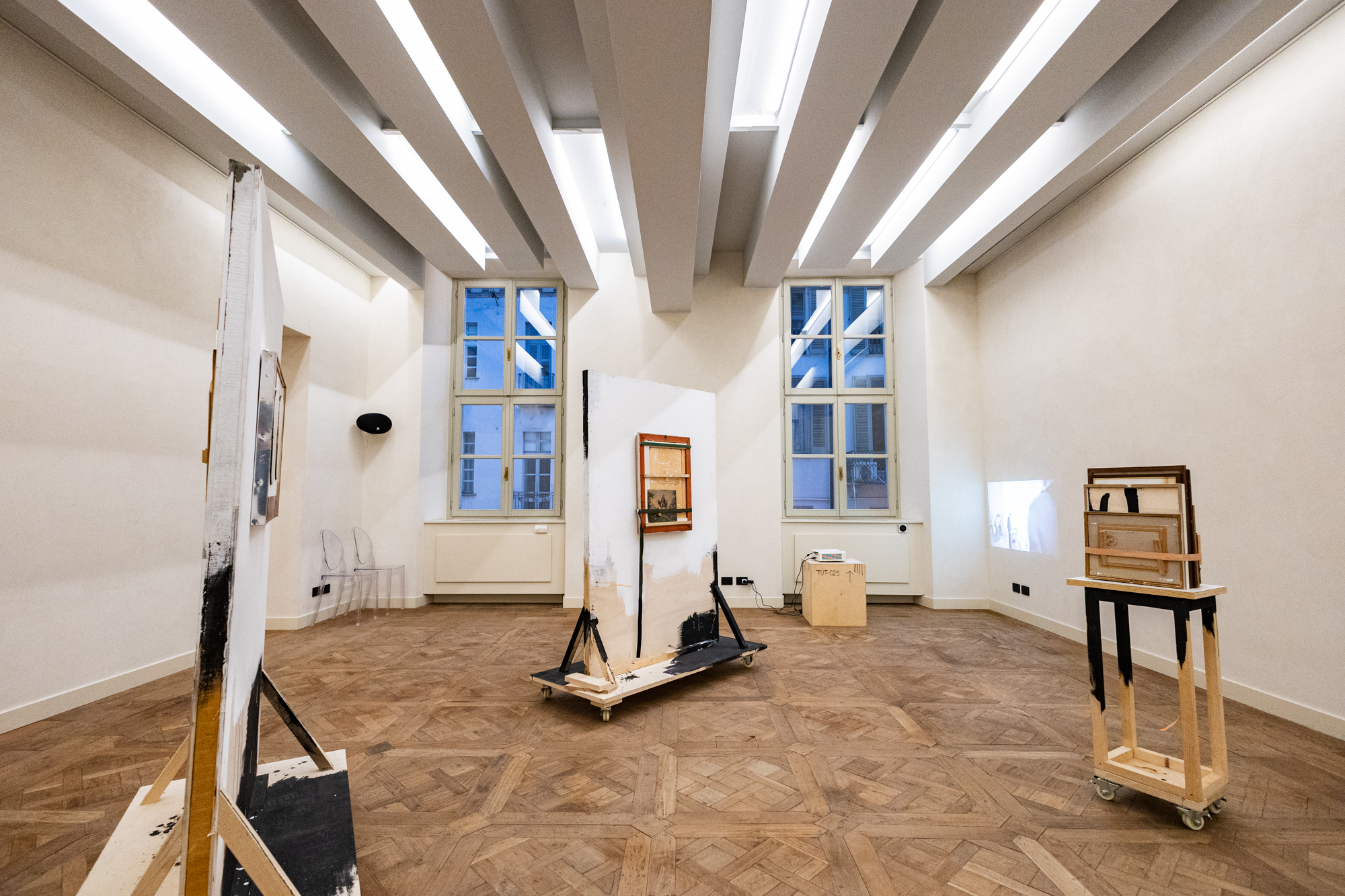
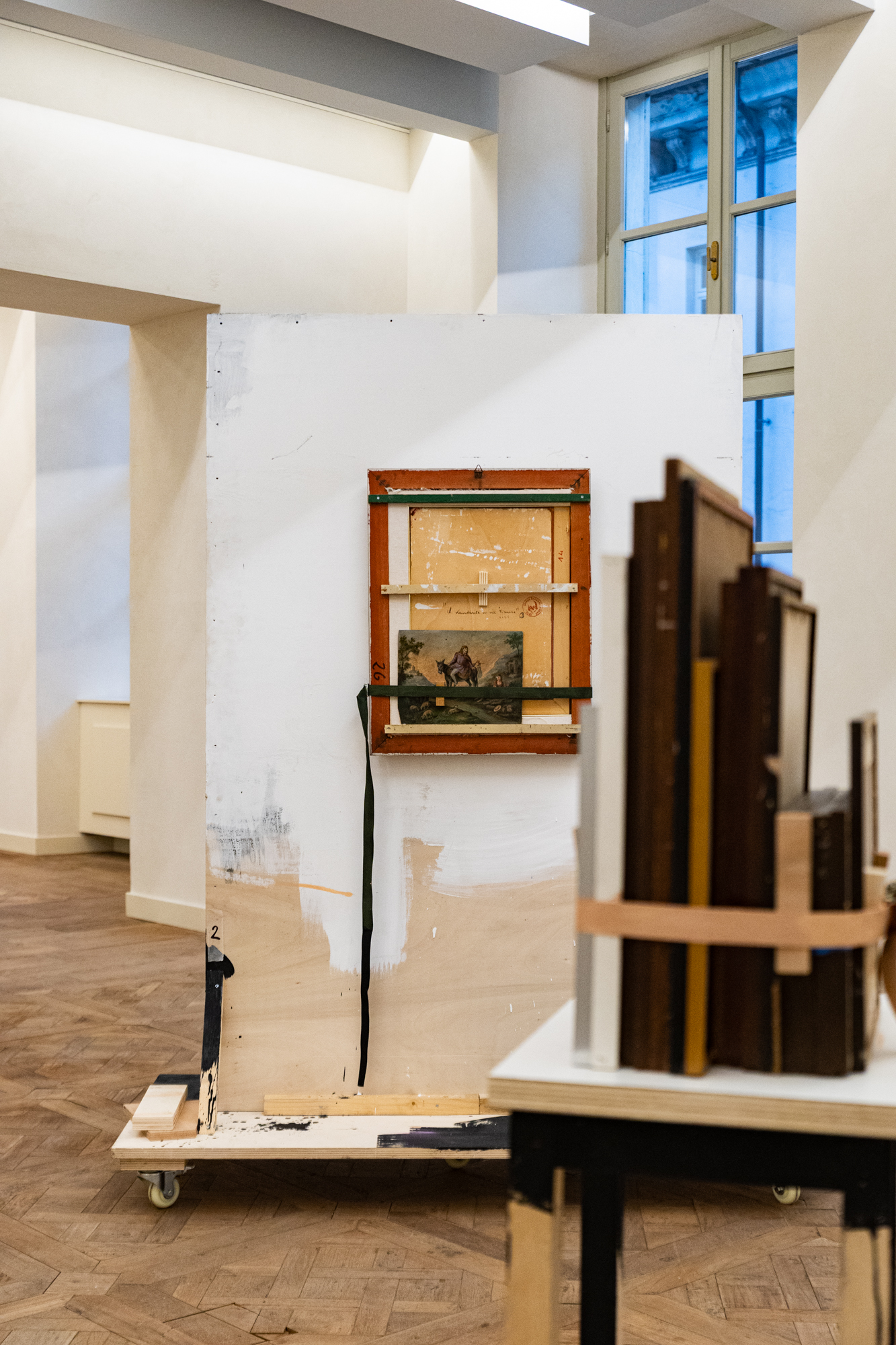
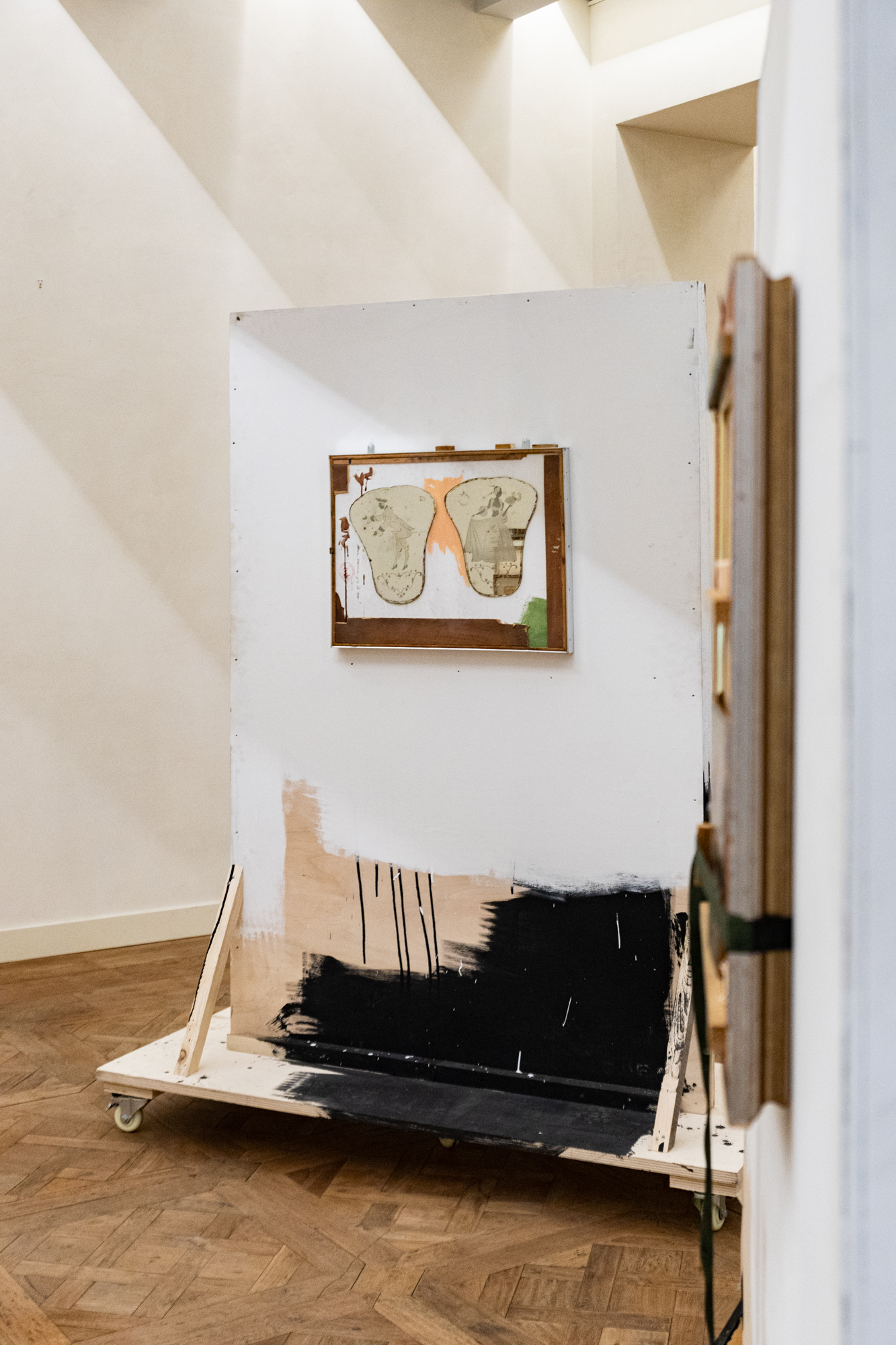
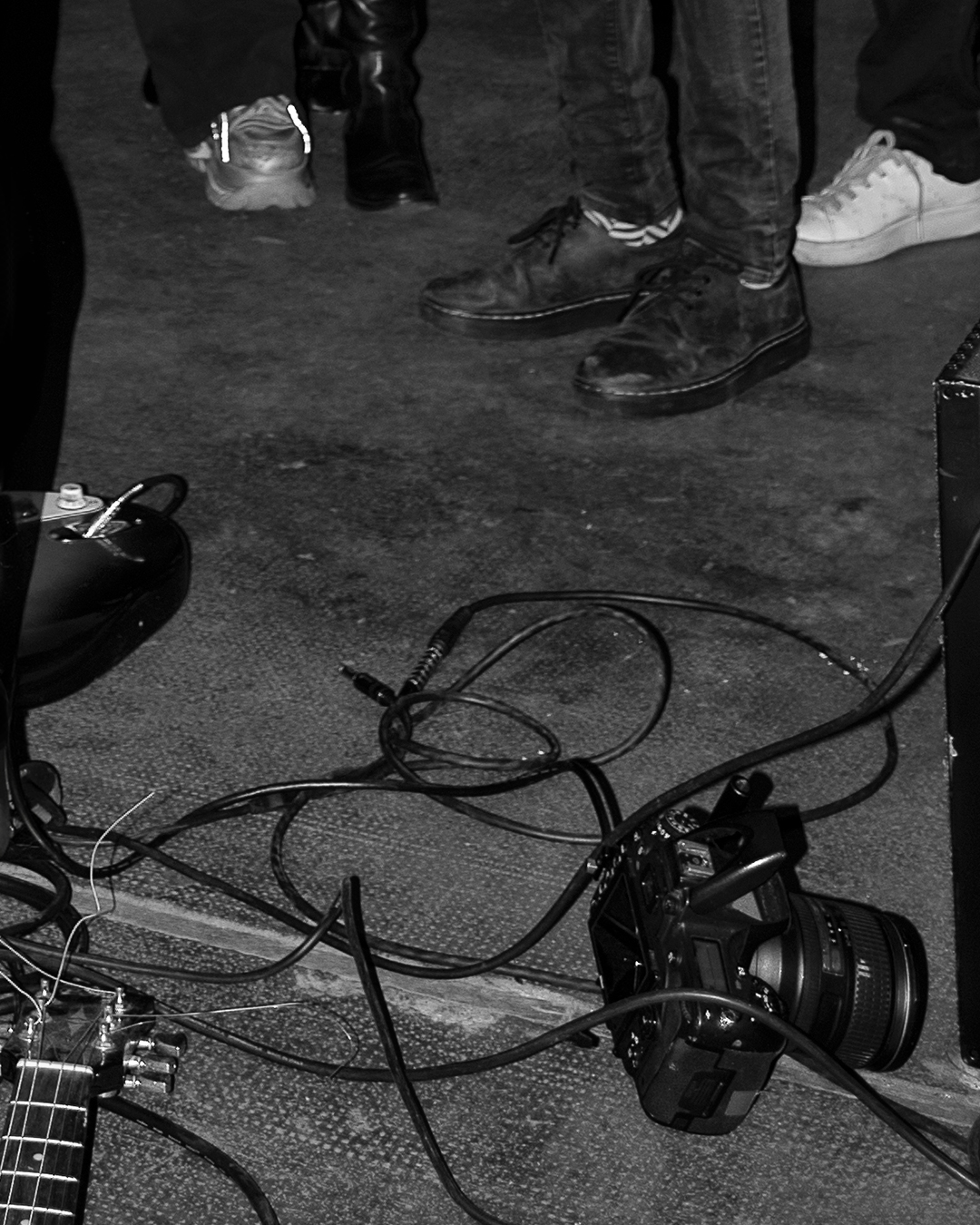
Next is the work of Jacopo Benassi, which encapsulates the essence of his creative journey developed through music, happenings, sculpture, and photography—a set of practices and languages that combine to build a highly recognizable visual universe rooted in contrast, tension, and the radicality of black and white. In continuity with his most recent research, a large trolley becomes the mobile base for an “exhibition within an exhibition.” Inside, printed and framed photographs accumulate and overlap, giving life to a deliberately precarious display that nevertheless possesses a strong theatrical and conceptual presence. The disorderly arrangement of the images, their layout, and their relationship with the supporting structure effectively convey the nature of the artist’s practice, where the display format resists all forms of stability and conventional organization. The wheeled trolleys become autonomous structures capable of redefining the relationships between body, space, and audience. The work thus acts as an operational and performative device in which movement becomes an integral part of the artistic language, and the precariousness of the arrangement translates into a way of constructing space that remains constantly open to new configurations and possibilities of engagement.
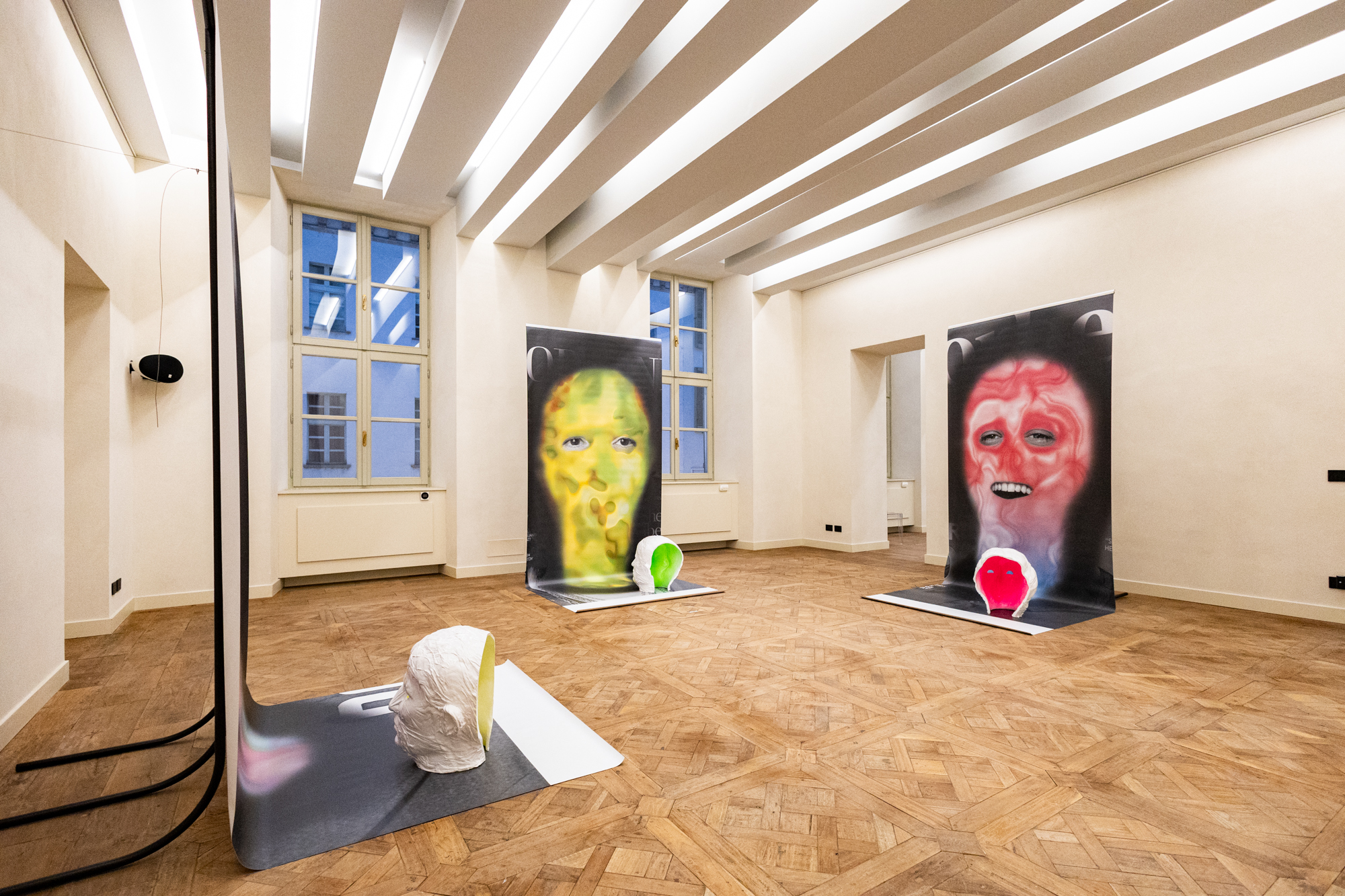
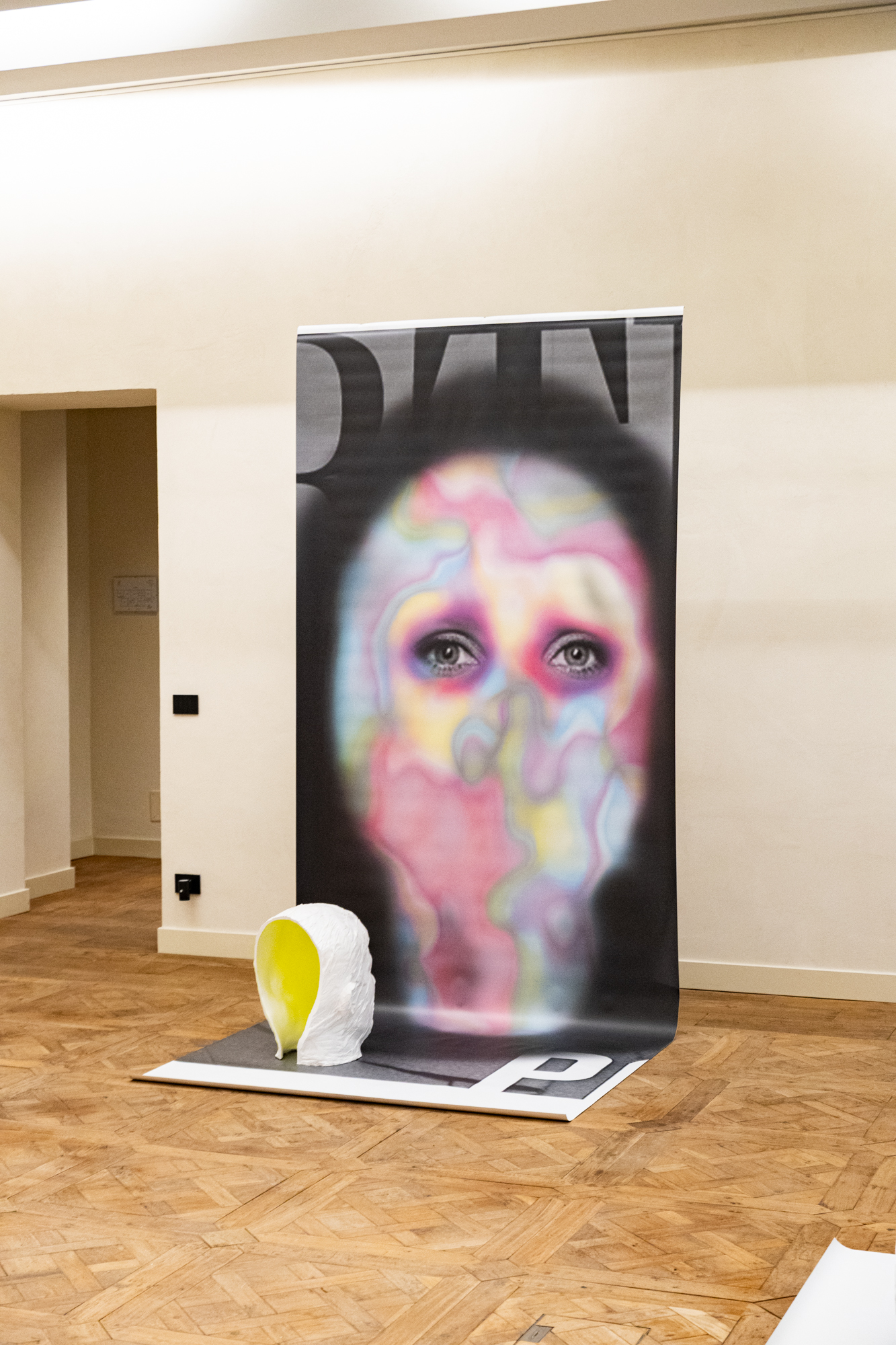
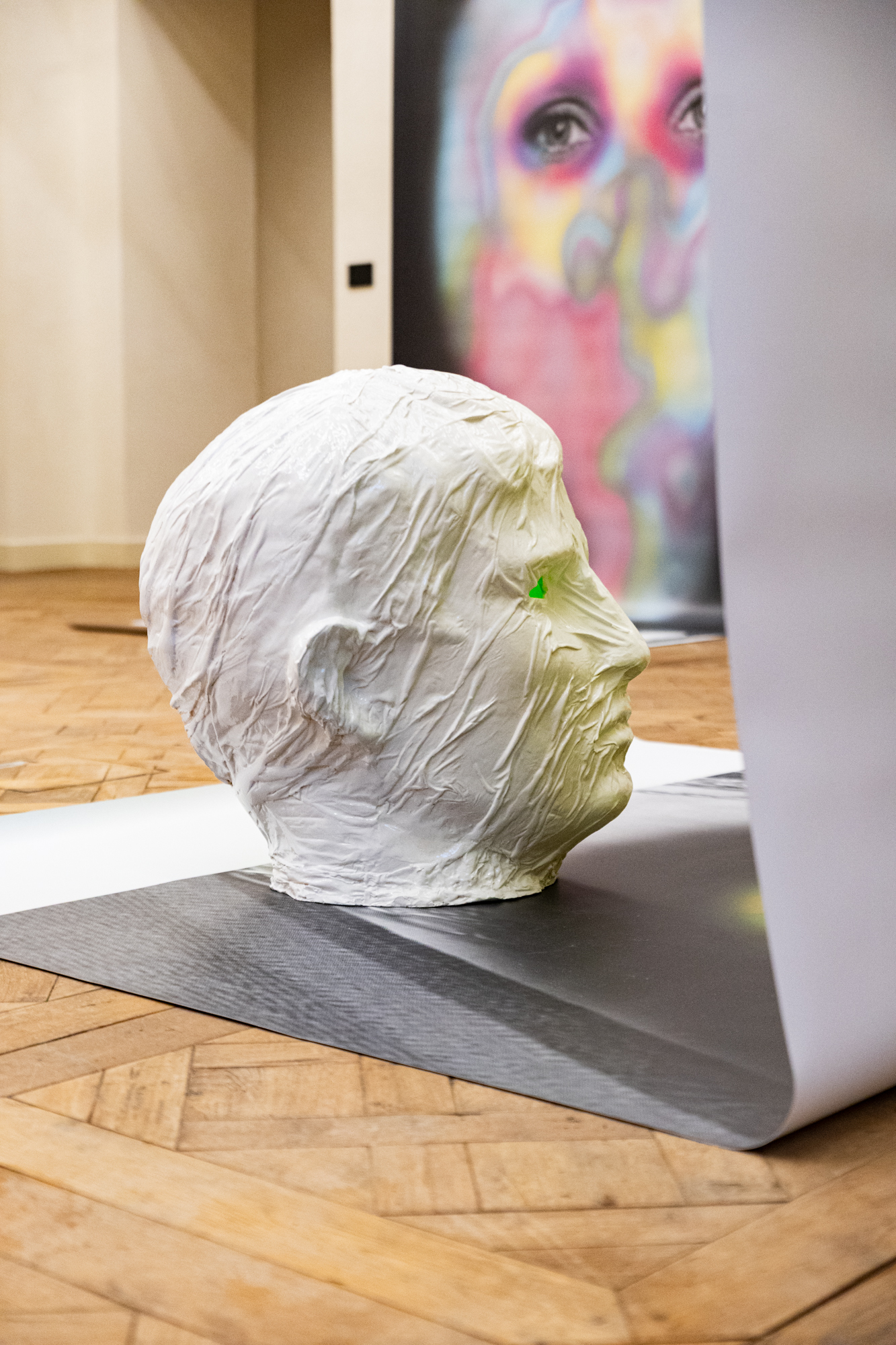
In the third room, Patrick Tuttofuoco’s monumental work, Pretty Good Privacy, brings classical busts of deities and historical figures into dialogue with the faces of prominent tech executives from companies such as Facebook, Snapchat, Google, and Yahoo. The ceramic sculptures, characterized by fluorescent colors, are supported by metal pedestals and paired with psychedelic panels unrolling across the floor, generating a visual contrast between individual uniqueness and industrial reproducibility, between tradition and innovation. Through this installation, Tuttofuoco explores the role of technology in contemporary society, addressing themes such as identity, memory, the fear of oblivion, and the immateriality of everyday experience. The juxtaposition of classical iconography and the faces of key figures in the digital economy highlights the shifting models of representation and the ways in which power, celebrity, and collective identity manifest today. References to sculptural tradition confront the artificial, psychedelic aesthetic of the tech world, initiating a reflection on new forms of image permanence and the gradual redefinition of the boundaries between the body, representation, and digital identity.
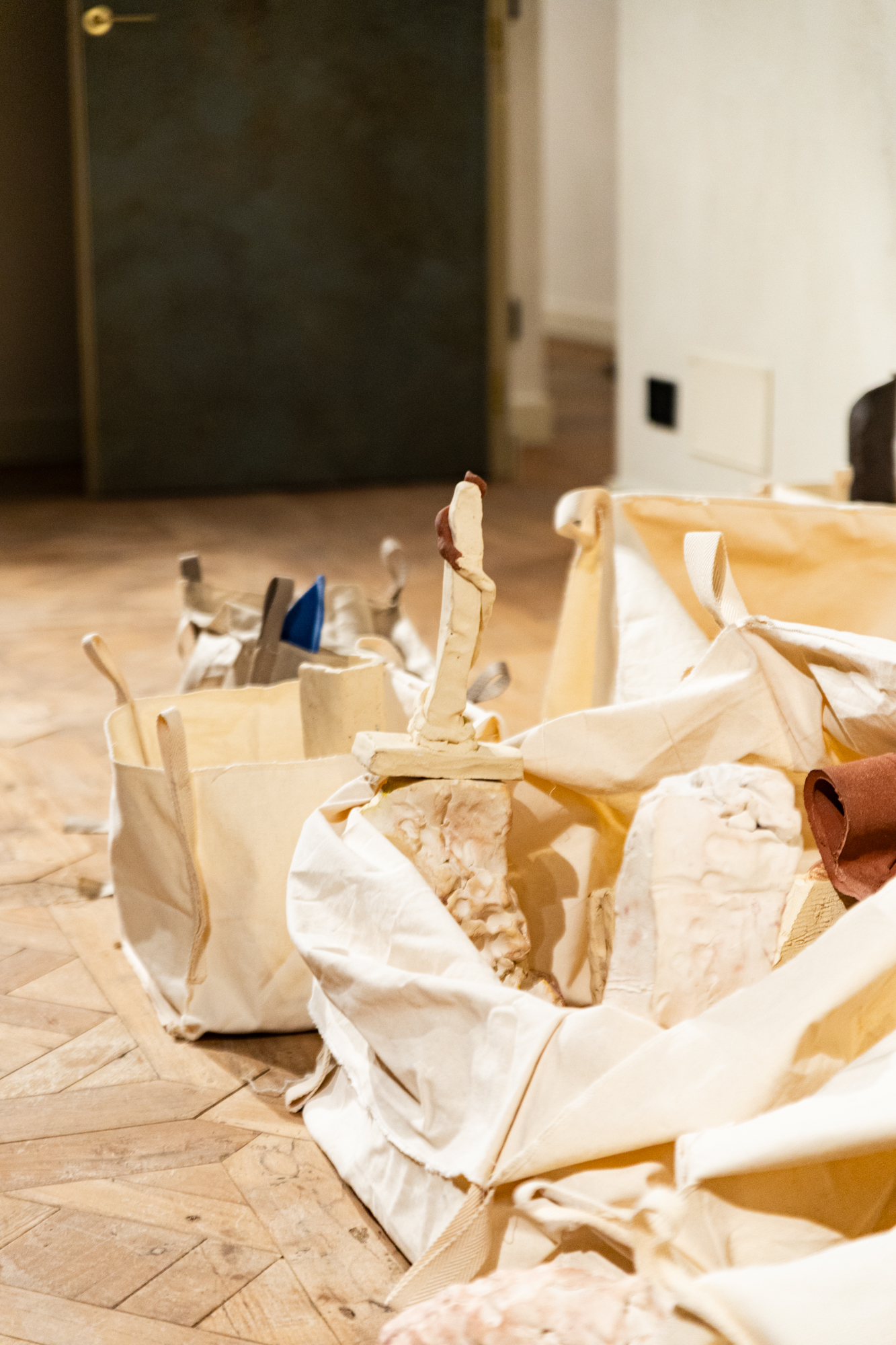
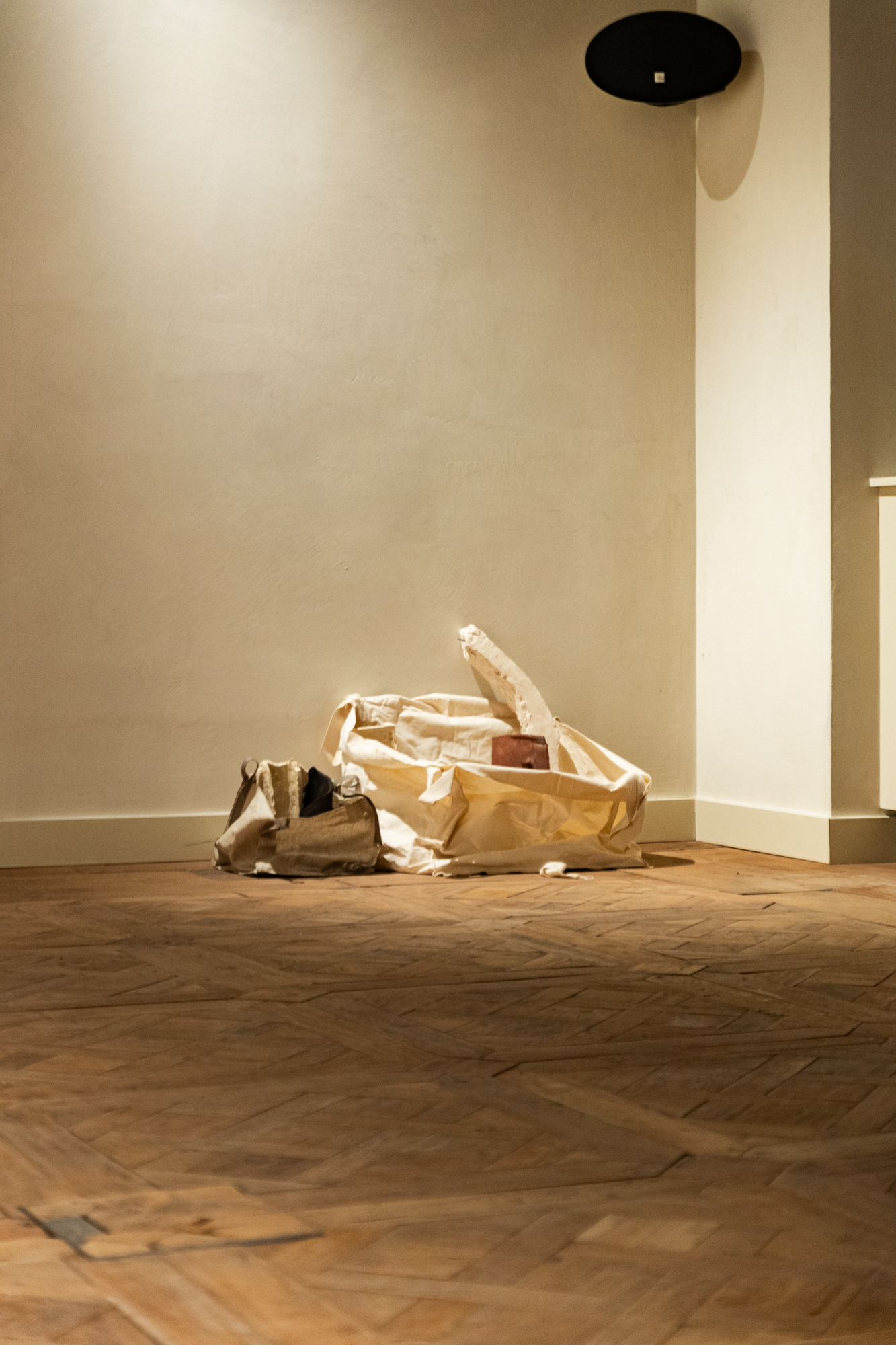
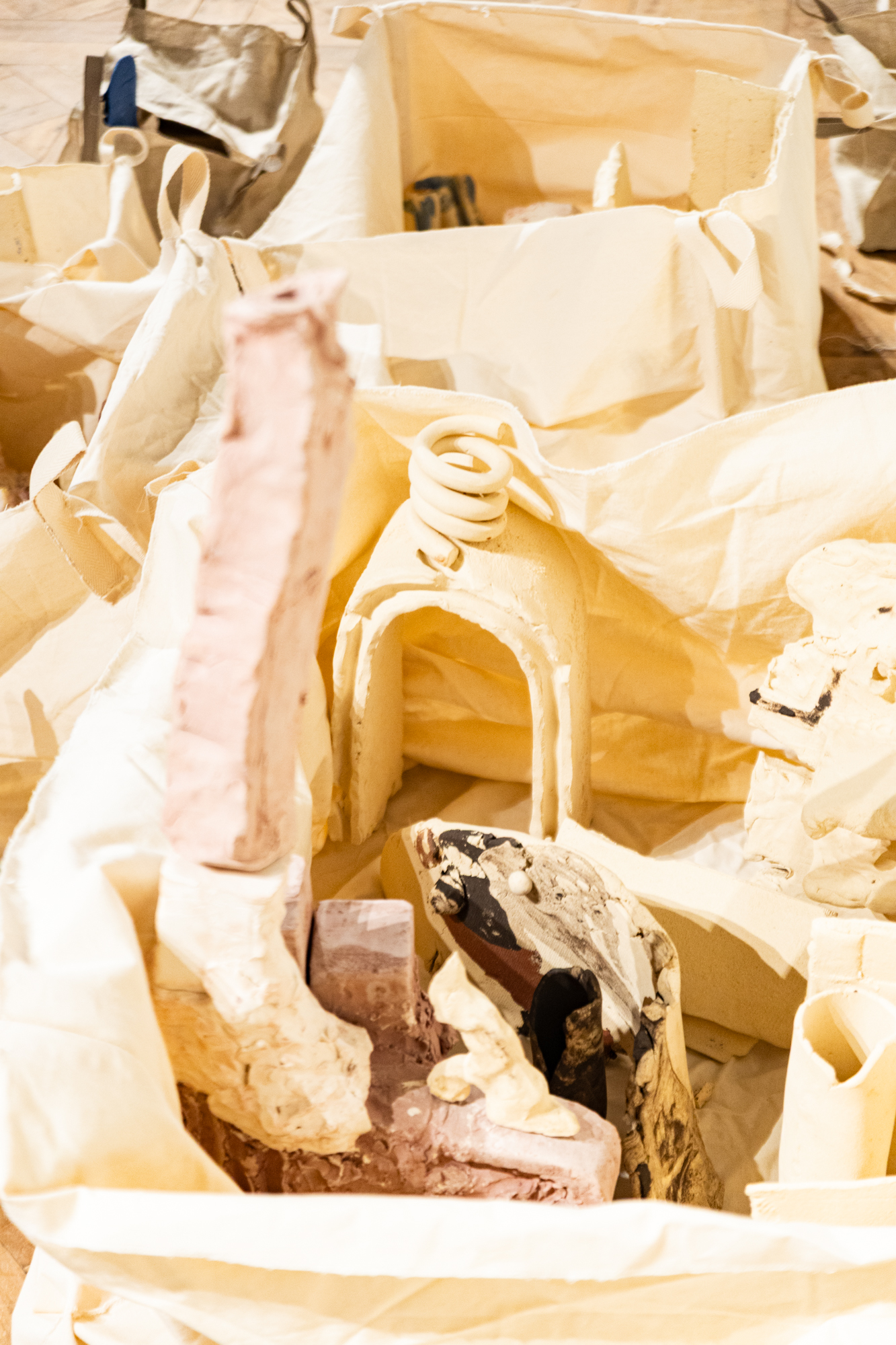
The exhibition concludes with Ludovica Carbotta, who presents a reflection on the urban fabric—specifically the transforming environment of construction sites. Stacked on the floor are ambiguous, site-specific elements resembling large debris containers. Handcrafted from raw linen, these scaled-down bags retain the recognizability of everyday objects associated with demolition, ongoing work, and temporary accumulation. Inside them, ceramic elements recreate waste materials and fragments typically destined for disposal. Pipes, cables, and other construction residues are thus removed from their original function and reinterpreted through the sculptural process. The ceramic material imparts a new tactile presence, transforming objects of production and demolition into autonomous entities suspended between resemblance and artifice. The contrast between the softness of the fabric and the solidity of the ceramic elements links container and content, shell and matter, evoking the tension between what is preserved and what is abandoned. Elevated by the venue itself, the construction site emerges here as an unstable, transitory space—a place of metamorphosis where waste loses its residual function to acquire a new formal and symbolic value.
ARCHIVIOFUTURO. The Observatory of the Possible
Photographs by Flavio Pescatori, Marco Bertani, Nicola Morittu, Francesca Cirilli
Curated by Benedetta Donato
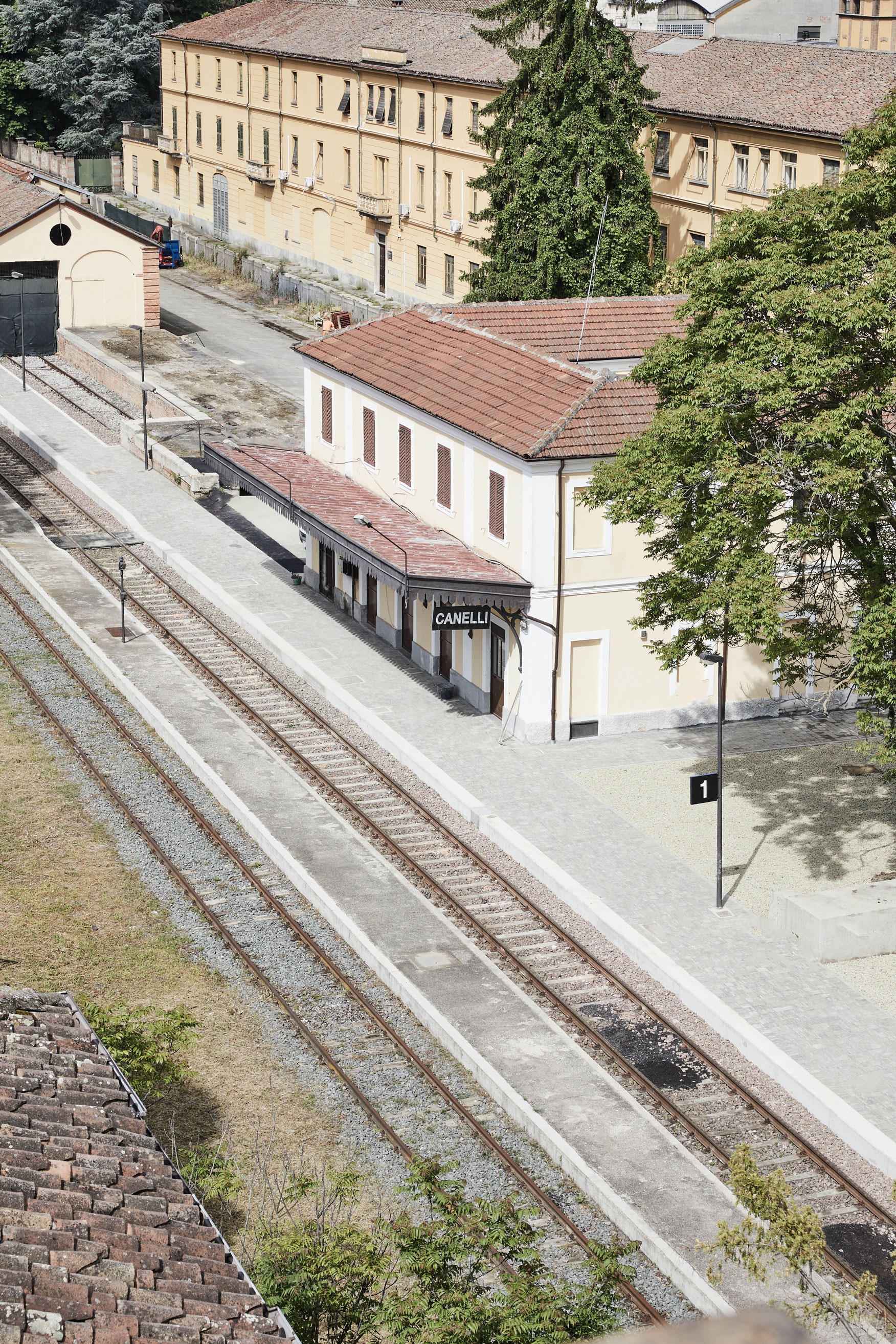
A selection of photographs created as part of ARCHIVIOFUTURO, the visual survey and dynamic archive project by Fondazione Bosca, developed within the spaces of PALAZZOIRREALE in Canelli.
A dynamic archive built on the involvement of photographers invited time and again to narrative the evolution of the space, engaging in a dialogue with the surrounding territory, its history, and the works of the various artists who have inhabited it. Piercing through time and redefining spatial boundaries are the perspectives of four photographers—Flavio Pescatori, Marco Bertani, Nicola Morittu, and Francesca Cirilli—called upon to reinterpret the essence of the venue. Through a careful calibration of visual styles, the selection of 12 photographs outlines the identity of a place that is both tangible and imaginary: a physical space rooted in history, yet open to present-day visions and projections.
L’Osservatorio del Possibile (The Observatory of the Possible) is articulated through a multiplicity of visual languages, ranging from documentary precision to evocative imagery, culminating in genuine conceptual overlaps. It captures the atmosphere, stratifications, and transformations of a constantly evolving location where the industrial heritage and regional roots of Monferrato are inextricably interwoven with contemporary artistic experimentation.
Each photographer brings their distinct gaze, bringing forth what once belonged to the realm of the imagination into something concrete and tangible. The image captures the inexorable passage of time and the transformations of space, turning the archive from a mere repository of memory into a true observatory of the possible.
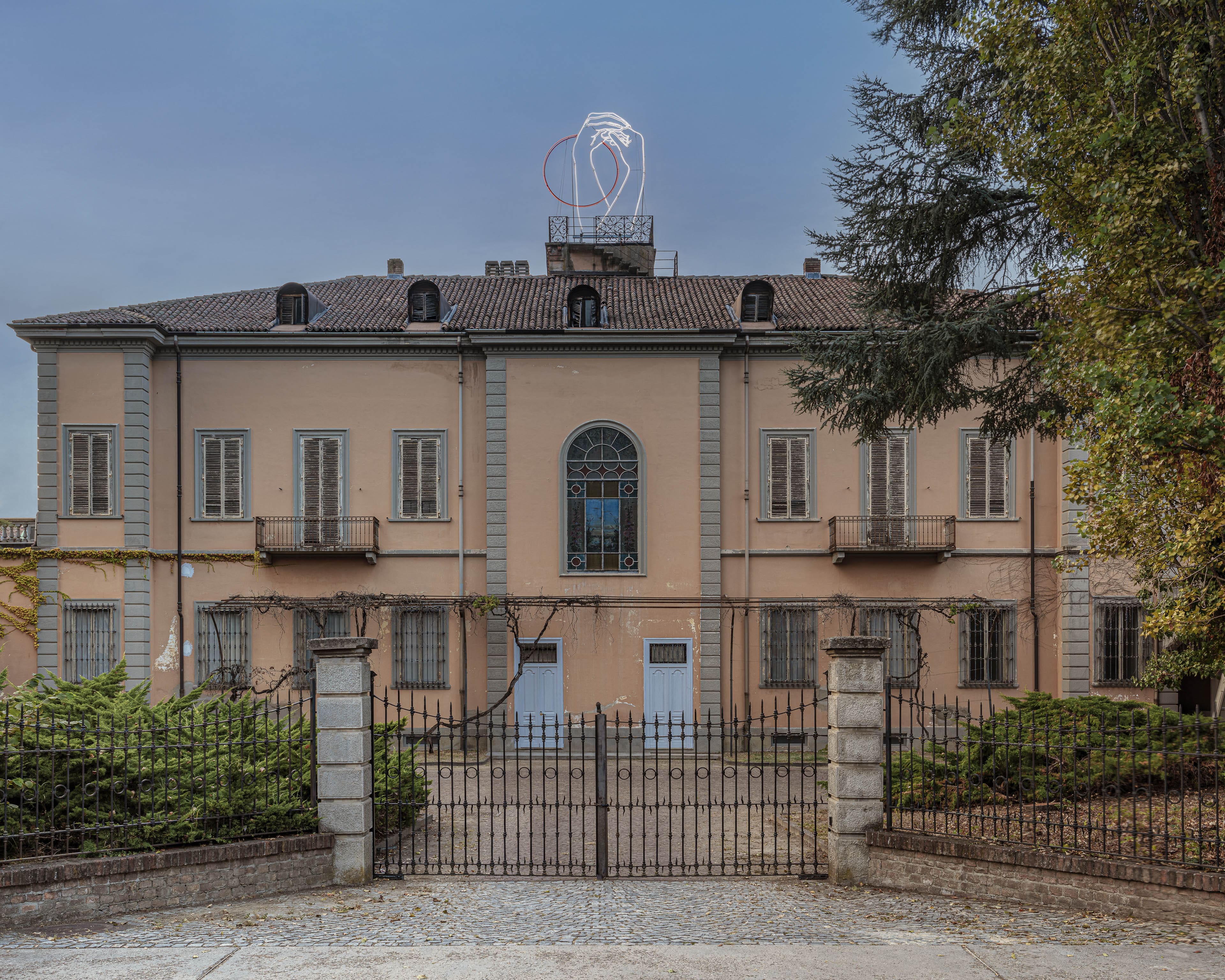
Flavio Pescatori captures the exterior space in all its volume and totality. His lens encompasses and contextualizes Patrick Tuttofuoco’s imposing site-specific work, Shape Shifting, which stands prominently above—serving as a visual beacon and a bridge between the architectural dimension and the palace’s future-oriented vision.
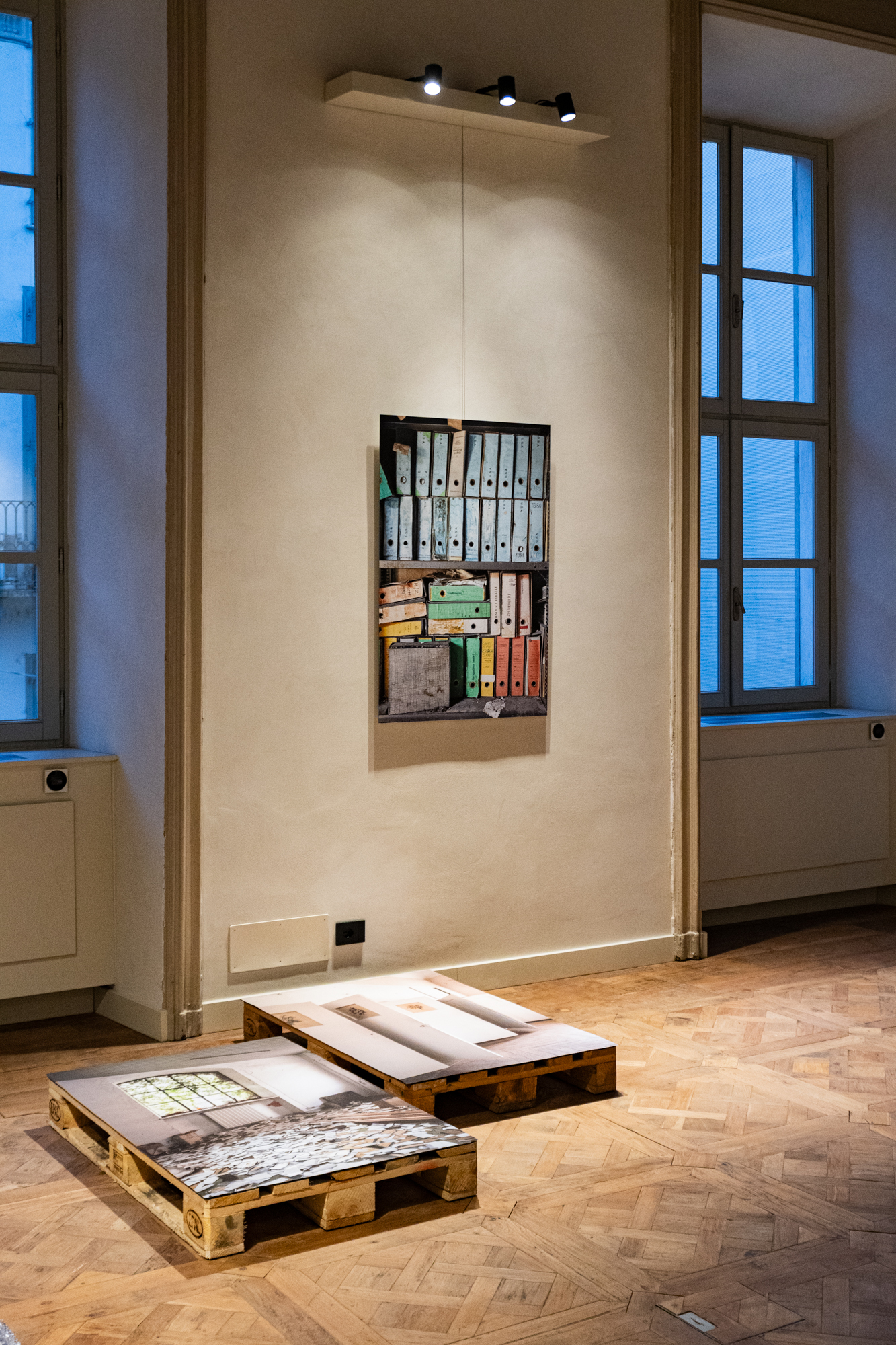
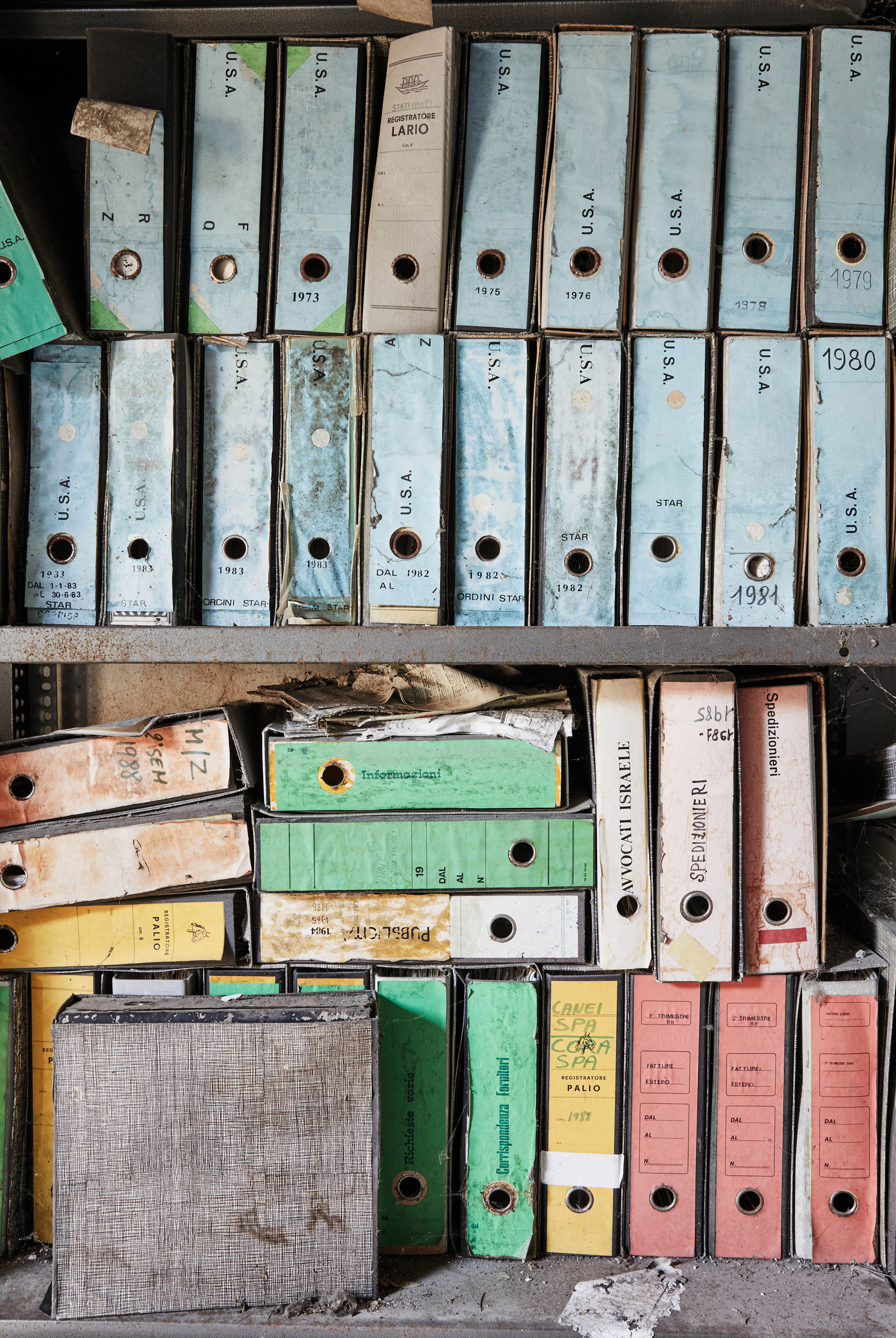
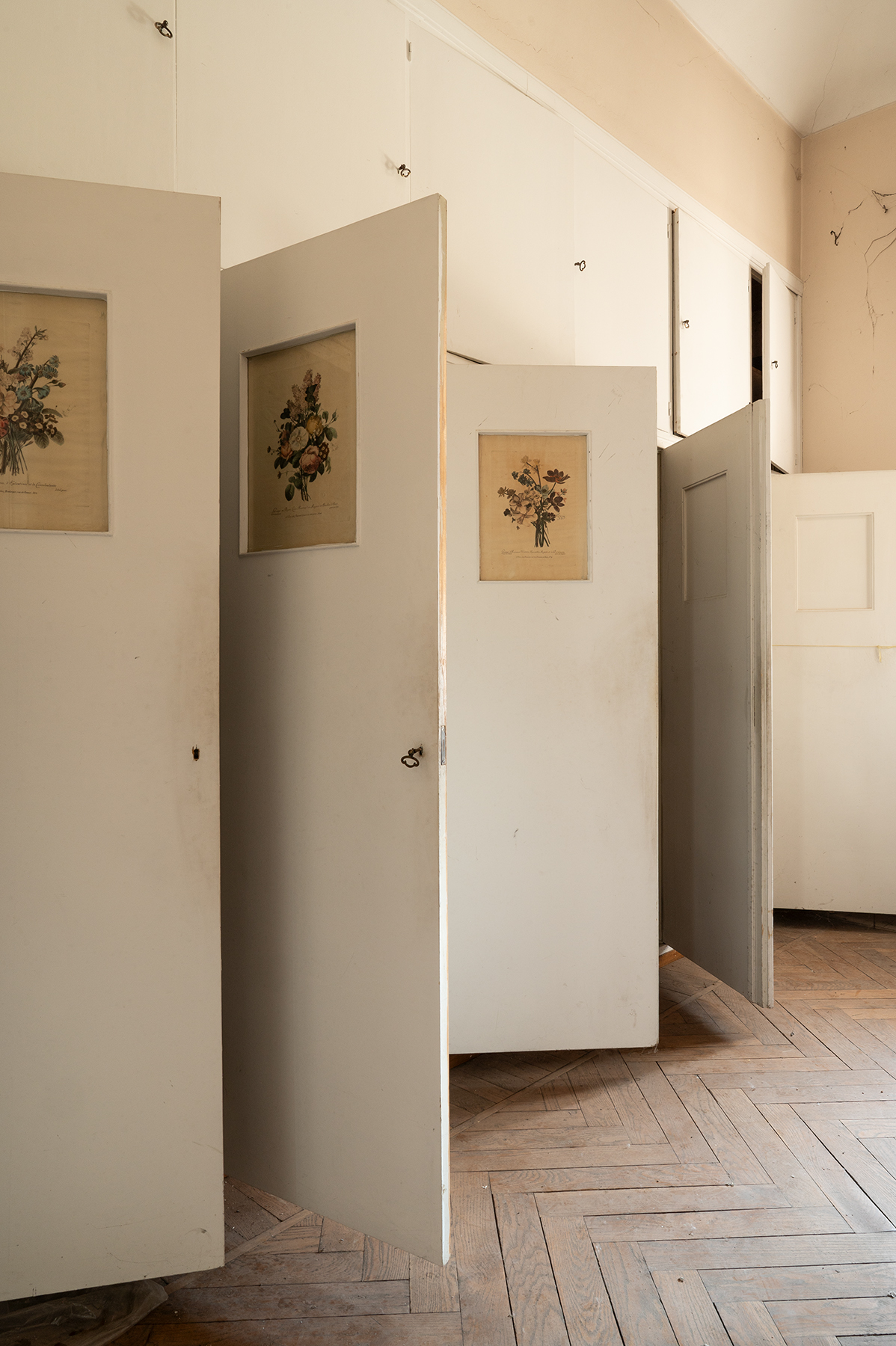
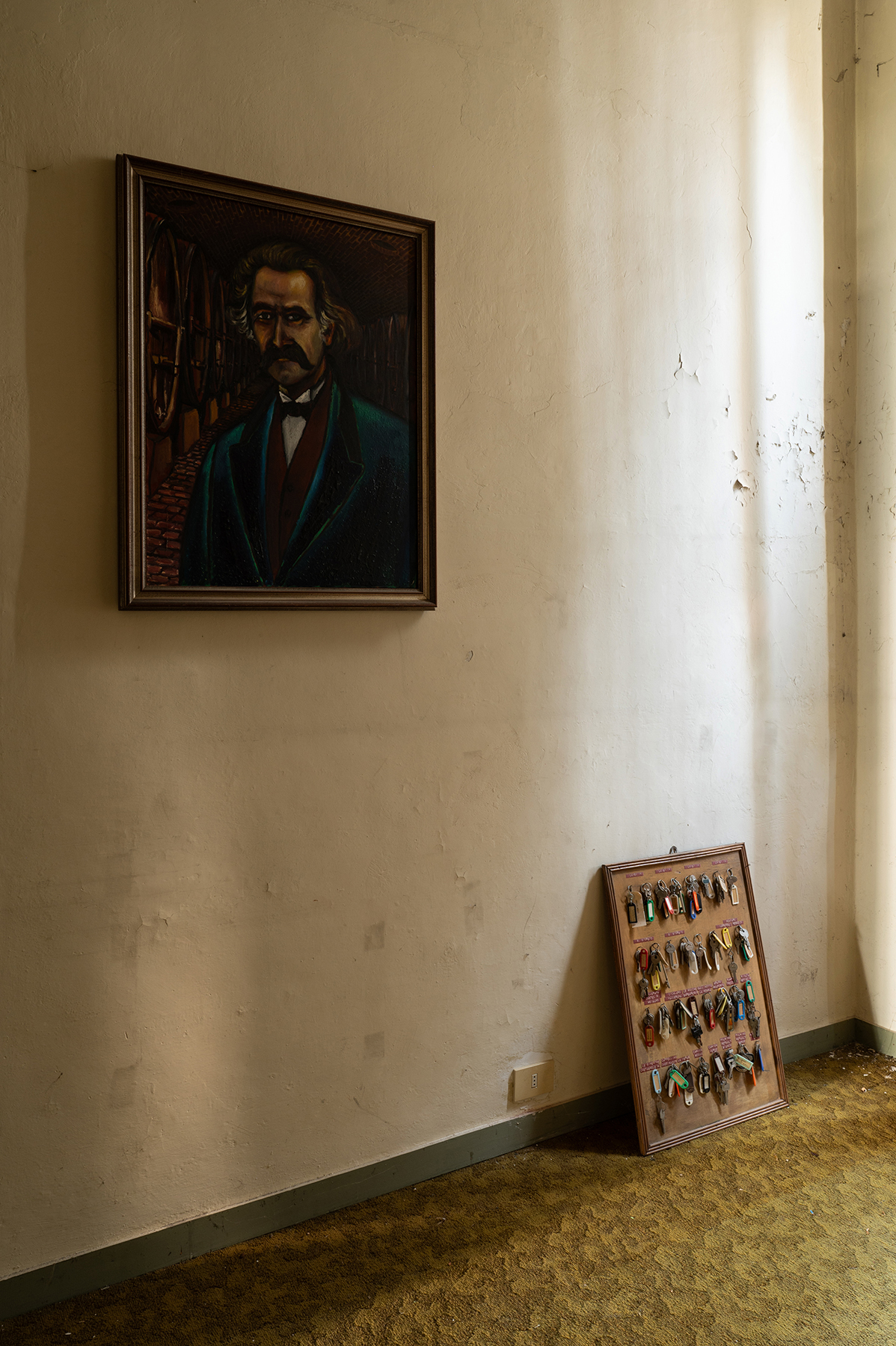
Marco Bertani, drawing on a knack for capturing the narrative of “non-places” and dormant atmospheres, delves into the intimacy of forgotten rooms. Through perspective views, staircases, and archive folders preserved over time, his photography reactivates the memory of past documents, freezing moments of fresh starts and reviving life.
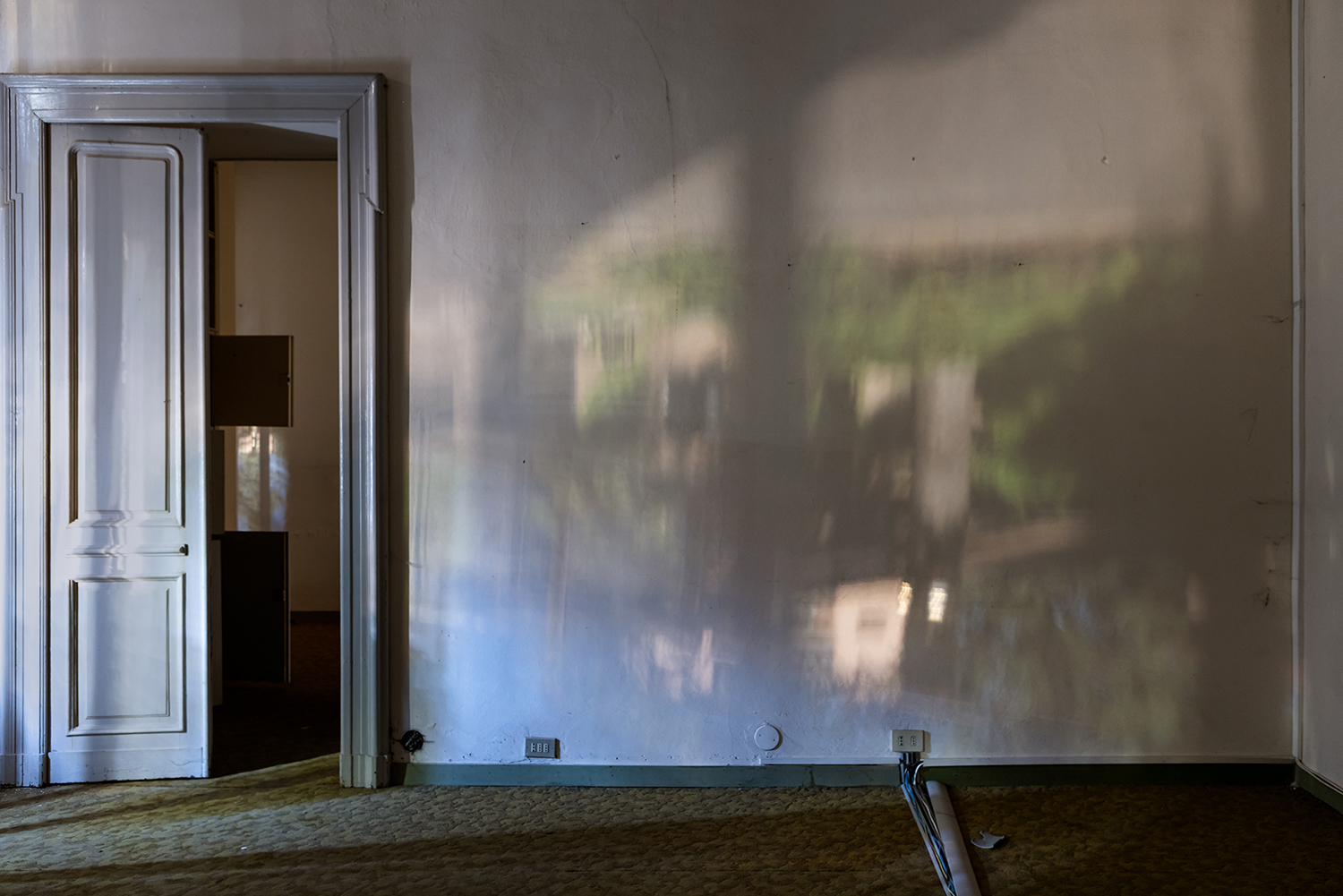
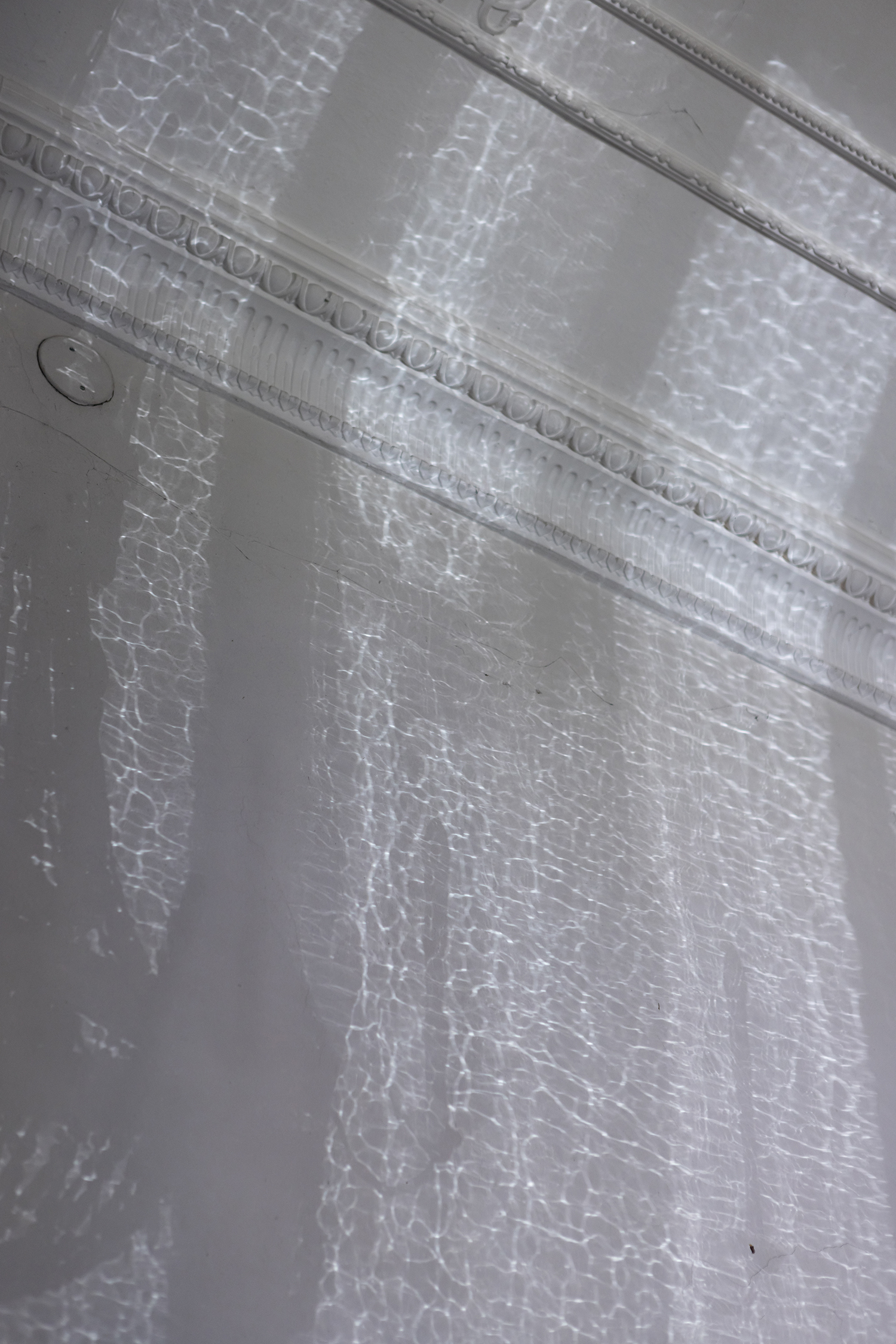
Nicola Morittu works directly on the skin of the architecture. His images dwell on the surface of the walls through a refined interplay of overlaps and stratifications: the marks of passing time thus welcome present-day visions, almost as if contemporary imagination were being projected directly onto the walls of PALAZZOIRREALE.
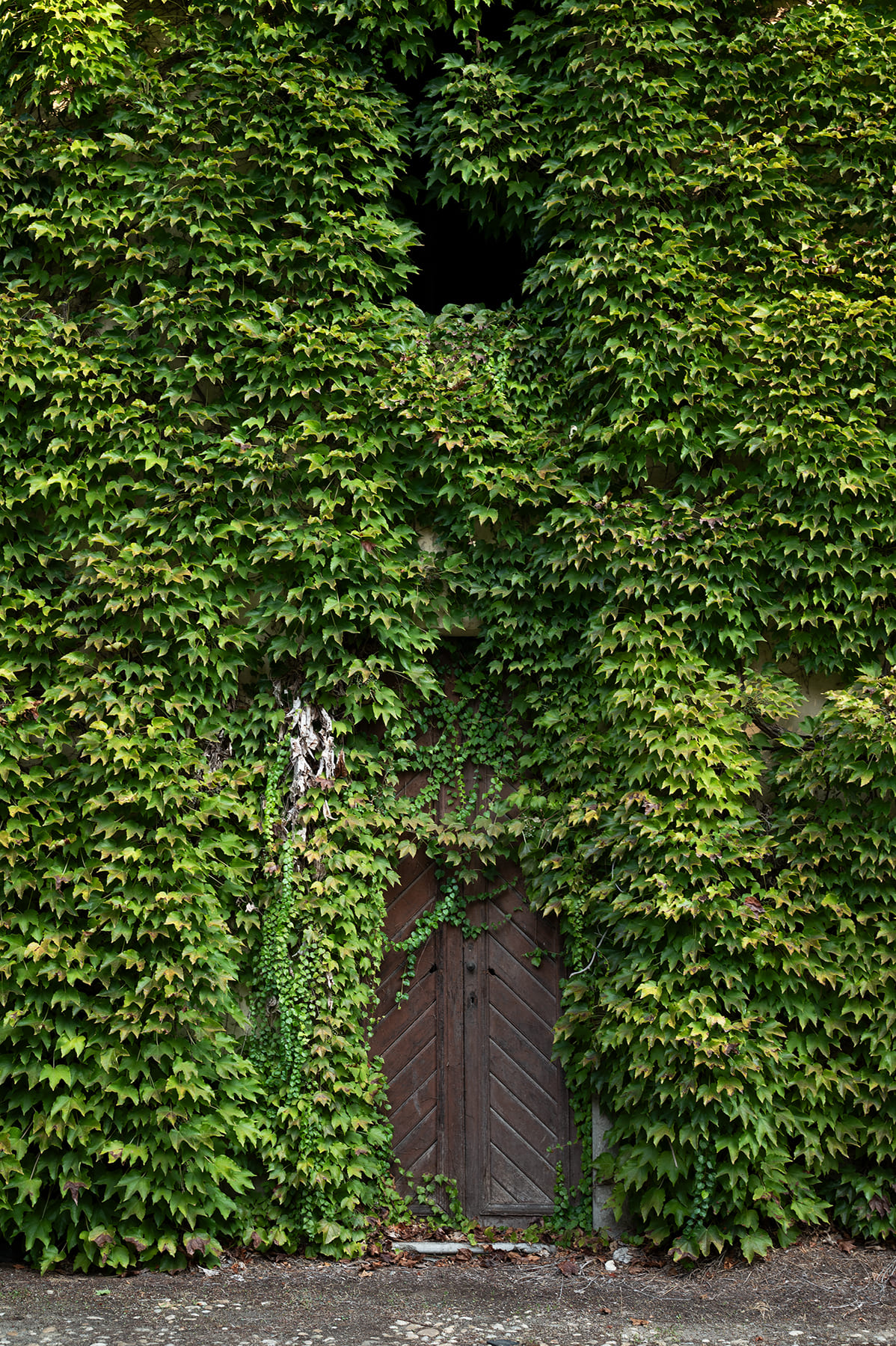
Francesca Cirilli moves silently through the rooms of the Palazzo, tracking shiny details and lingering fragments. Hers is a poetic exploration where nature—represented by the ivy enveloping the thresholds—waits and guards the space, awaiting the moment when new boundaries are crossed and rediscovered.

 PALAZZOIRREALE OUT OF HOME | GIUSEPPE GABELLONE
 PALAZZOIRREALE OUT OF HOME | GIUSEPPE GABELLONE
 PALAZZOIRREALE OUT OF HOME | JACOPO BENASSI
 PALAZZOIRREALE OUT OF HOME | JACOPO BENASSI
 PALAZZOIRREALE OUT OF HOME | JACOPO BENASSI
 PALAZZOIRREALE OUT OF HOME | JACOPO BENASSI
 PALAZZOIRREALE OUT OF HOME | PATRICK TUTTOFUOCO
 PALAZZOIRREALE OUT OF HOME | PATRICK TUTTOFUOCO
 PALAZZOIRREALE OUT OF HOME | PATRICK TUTTOFUOCO
 PALAZZOIRREALE OUT OF HOME | ARCHIVIOFUTURO | L'OSSERVATORIO DEL POSSIBILE
 PALAZZOIRREALE OUT OF HOME | LUDOVICA CARBOTTA
 PALAZZOIRREALE OUT OF HOME | LUDOVICA CARBOTTA
 PALAZZOIRREALE OUT OF HOME | ARCHIVIOFUTURO | L'OSSERVATORIO DEL POSSIBILE
 PALAZZOIRREALE OUT OF HOME | ARCHIVIOFUTURO | L'OSSERVATORIO DEL POSSIBILE
 PALAZZOIRREALE OUT OF HOME | ARCHIVIOFUTURO | L'OSSERVATORIO DEL POSSIBILE
 © Flavio Pescatori, PALAZZOIRREALE #1, Shape Shifting, opera site specific © Patrick Tuttofuoco, Shape Shifting, Courtesy Fondazione Bosca ETS
 ©Marco Bertani, PALAZZOIRREALE #2, 2024, Courtesy Fondazione Bosca ETS
 ©Marco Bertani, PALAZZOIRREALE #1, 2024, Courtesy Fondazione Bosca ETS
 © Nicola Morittu, PALAZZOIRREALE #1, 2025, Courtesy Fondazione Bosca ETS
 © Nicola Morittu, PALAZZOIRREALE #2, 2025, Courtesy Fondazione Bosca ETS
 © Francesca Cirilli, PALAZZOIRREALE #2, 2026, Courtesy Fondazione Bosca ETS
 © Francesca Cirilli, PALAZZOIRREALE #1, 2026, Courtesy Fondazione Bosca ETS
 © Francesca Cirilli, PALAZZOIRREALE #3, 2026, Courtesy Fondazione Bosca ETS


September 20, 2026 – October 25, 2026
Via Luigi Bosca 2, Canelli (AT)
September 20, 2025 H.11:30 a.m.
Via Luigi Bosca 2, Canelli (AT)
June 19, 2025 H 19:00
Via Luigi Bosca 2, Canelli (AT)
